This page provides information on copyright, care, and repairs of the artwork.
Copyright|Artwork Care|Restoration & Repair Services|Japanese Instruction
A Gentle Request Regarding Copyright
-
November 2025’s show marked my fifteenth solo exhibition.
I would like to express my heartfelt gratitude for your continued support.
In recent years, public awareness of copyright law has been growing. Yet, perhaps because of the relaxed presence of The White Dog, occasional cases of rights infringement still occur. I do not intend to check every instance, but it does make me a little sad when the core concept I hold dear — The White Dog is not just a dog but a reflection of ourselves — is overlooked.
Certainly, reproducing or altering a cropped image is illegal, yet it can easily spread online. But far more precious to me, as a painter, is the quiet way an original The White Dog painting finds its place in someone’s life — bringing a small moment of warmth to their day. That slow, sincere path is something I hope to cherish above all else.
This message has become a little long, but in order for me to continue focusing on creating original works, I would like to kindly ask for your cooperation with the following. In every case, your support helps ensure that The White Dog does not drift away its original world and that its copyright remains protected.
I will continue to paint each piece with care, one by one. Thank you very much for taking the time to read this.
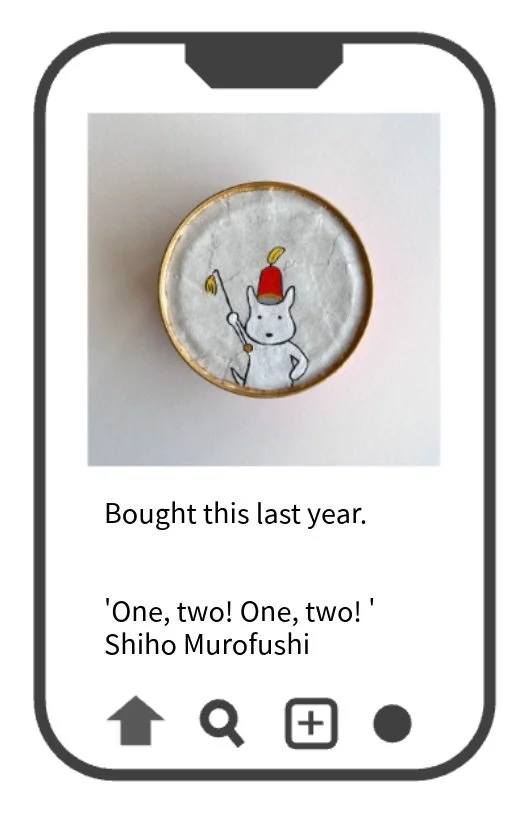
Please include credit (title and artist name) when sharing the work
You’re very much welcome to share the work on social media! Please credit the artist and the title of the piece.
Your comments encourage me and are always appreciated.
2. Displaying the Artwork in Places Where Many People or Unspecified Groups Gather
If you plan to display the work in a setting where many people or an unspecified number of guests may gather—such as at parties or events—even if they are acquaintances of the owner, I kindly ask that you notify the artist in advance.
In such cases, the same copyright considerations apply. Please include a caption or a brief note to ensure that the work is properly credited. If you are unsure about anything, please feel free to consult the artist.
3. If the artwork appears in a commercial context
If a purchased work appears in commercial photos/videos, prior confirmation or credit may be required depending on image size or resolution. Kindly contact us in advance.
4. On merchandise using sold artwork images and reproduction of paintings

On Merchandise Using Sold Artwork Images
Ownership of the physical artwork belongs to the buyer, but copyright remains with the artist. Images of the work taken by the artist may be used commercially, including for merchandise production.
Reproduction of Artwork
The artist does not produce reproductions of paintings, such as giclée prints or commissioned pieces that replicate past works exactly.
However, the artist may, at their own discretion, revisit similar situations or themes (e.g. someone eating sushi or going for a walk, etc.), or compositions in order to explore such expressions further. As a result, some new works may resemble past pieces in atmosphere. These are not considered reproductions. Whether the artist chooses to paint a new work from their own vision, and whether or not tracing paper is used to copy an existing work—these are key points the artist uses to distinguish original works from reproductions.
As for items such as wooden fans, pen cases, and coin purses, they are created as part of a hand-painted series. The same composition is painted multiple times, one by one, by hand, sometimes with the use/help of tracing paper. Serial numbers (for wooden fan only) can be found next to the signature and also beside the artwork title on the included certificate.
5. Even Personal Use Can Lead to Unintentional Copyright Infringement
Reproduction, modification, publication, distribution, sale, or alteration of the artwork images, even for personal use, is strictly prohibited without prior written permission.
Any secondary use requires a formal written agreement beforehand, and a secondary usage fee will be applied where necessary.
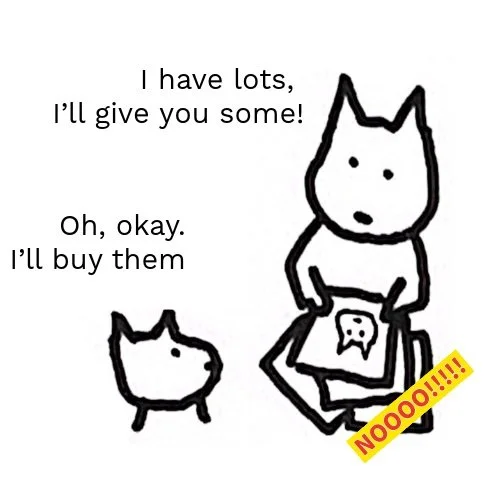
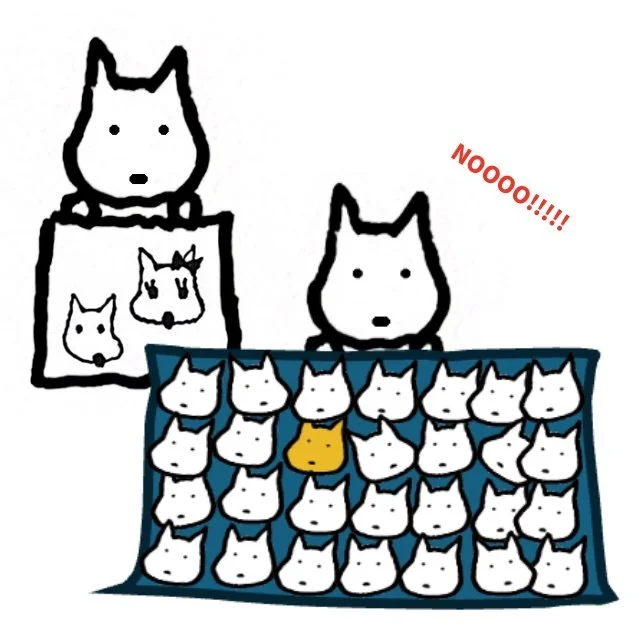
Showing a reproduced or modified version of the artwork to others (including simple acts like adding a speech bubble or text) can give an impression unintended by the artist, even if it is not posted on social media.
The world of The White Dog is continued by creating each original painting one by one. While the atmosphere of the work is casual and fun, behind the scenes, the artist put their heart and soul into creating precise original pieces so that they can be welcomed into your hands as safe and secure works of art.
The rules introduced here are common to all artists. We sincerely appreciate your understanding and cooperation.
-
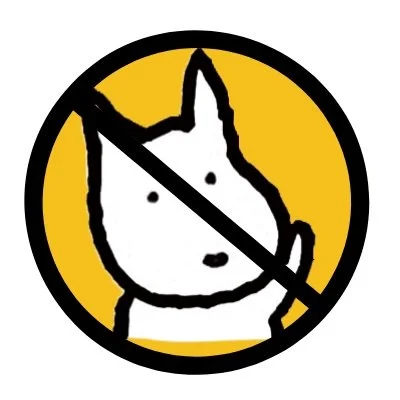
To prevent impersonation and because I want to avoid misrepresenting the carefully built world of The White Dog, I kindly ask that you refrain from using images of my works as SNS icons, without my permission.
This request applies even if you have commissioned a custom piece for your personal use.
-
I deeply appreciate your feelings of support and the desire to share joy. However, prior written permission is required for producing, distributing, or selling goods that use images of my artworks.
Even for small quantities, secondary usage fees apply. Please refrain from distributing items without permission.
-
Please refrain from publicly sharing (for example via SNS) fan art, copies, or digitally/altered works created from:
- images from this website, or
- photographs of pieces you purchased.
Altering or reconfiguring the work may unintentionally give impressions that differ from my original intent, and can potentially infringe on my moral rights as the artist.
For Long-Lasting Enjoyment of Your Artwork — Artwork Care & Handling
-
• Once a year, please check the hanging cord on the back
Make sure there is no loosening or abrasion. (I use cords designed specifically for artworks. If you need to replace one, please purchase the same type of cord from an art supply store.)
Small pieces such as 10 × 10 cm canvases or mini frames may not have hanging cords attached.
•Please note that paintings may contain tiny specks such as dust, lint, or occasional brush hairs
These are a natural part of hand-painted work.
• For dust on the surface
A gentle blow— breath is usually enough.
If it feels like dust has built up, a camera lens blower works well.
Please avoid strong air-spray cleaners intended for keyboards.
You may also use a soft, lint-free cloth—without pressing the surface—to lightly sweep across it.
• While I take care to create durable works, please avoid contact with sharp or pointed objects
This includes corners, protruding areas, and even flat painted surfaces.
• Although I use highly lightfast paints, please avoid displaying or storing the artwork in environments with
extreme humidity
high temperatures
continuous direct sunlight
• If the artwork becomes wet
Gently blot the moisture using a soft, lint-free cloth, and let it air-dry at room temperature.
• Please avoid placing bubble wrap directly against the painted surface
When the textured (bubble) side of bubble wrap touches the surface—especially glossy areas—indentations will inevitably appear.
Protect the painted surface with silicone paper or similar, and wrap with the flat side of the bubble wrap facing inward.
• Works painted in acrylic are finished with varnish to protect the surface,
but please avoid storing them in direct contact with acrylic sheets or similar materials.
Over time, the two surfaces may bond and become inseparable.
-
Paintings may contain very fine specks such as dust, tiny fibers, or an occasional brush hair
These are a natural part of hand-painted work.
Please avoid rubbing or pressing the painted surface
While I use highly durable, flexible, and lightfast paints,please avoid displaying or storing the artwork in environments with
extreme humidity
high temperatures
continuous direct sunlight
If the artwork becomes wet
Gently blot the moisture with a soft, lint-free cloth, and allow it to air-dry at room temperature.
For wooden fans
They are made of thin wooden sheets laminated together.
If dropped from a height—especially onto the thinner sections—they may crack.
For works painted with acrylic
A water-repellent varnish is applied to protect the surface.
However, areas with complex shapes (such as near stitching on small accessories like coin purses) may contain tiny pinholes where varnish cannot fully reach, and certain usage conditions may gradually reduce water repellency.
Please avoid prolonged exposure to water.
Because both acrylic paint and varnish contain acrylic resin,
please avoid storing the artwork in prolonged, pressured contact with acrylic sheets or acrylic-resin jewelry.
They may fuse together over time and become impossible to separate.
Please avoid placing bubble wrap directly against the painted surface
When the textured (bubble) side touches the artwork—especially glossy areas—indentations will inevitably appear.
For storage, protect the surface with silicone paper or similar, and wrap with the flat side of the bubble wrap facing inward.
Restoration & Repair Services
I truly cherish the connection made when one of my unique, original works finds a new home. While I may not be able to fulfill every request, I would like to offer my support if your artwork requires repair while being displayed or enjoyed in your home—for instance, if it is accidentally damaged or stained. Please feel free to consult with me via thecontact form or email.
I will do my best to restore the piece within my capabilities. Please note that the owner will be responsible for all two-way shipping costs.